Just back from a fractured week in Powys and Herefordshire, where Alex and his young cousin playfully broke up the otherwise Proper Grown Up stuff of the Hay Festival, and my breathing in of the lush green hills of Presteigne, in old Radnorshire - home of the very well-groomed (albeit naive) Pristine Christine, the best green teen of Presteigne.
Hay-wise, with my mother in mind (she be a fan), on the first Saturday evening I'd elected to go and listen to Paul O'Grady in conversation with Sandi Toksvig. Sure enough, as he waxed lyrical on the second volume - The Devil Rides Out - of his memoir, his wit, warmth and self-effacement beguiled the thousand-plus audience in the pavilion. On the back of previous Hay experiences (below par interviewers and chairs), Toksvig pitched perfectly.
The following day, I committed only to Javier Cercas' session, intelligently and generously chaired by Jon Gower. I knew little of Cercas, but from listening to his appearance on World Book Club a few months ago, I expected sufficient hooks of interest. The particular quality of his that drew me in, was his appetite for forensically unpacking social and cultural 'moments', or actions - the title of his session, The Anatomy of a Moment, saying as much. The historic thread that ran through much of Cercas' discussion concerned the transition in governance of Spain. At the heart of this was the failed coup d'etat of Colonel Tejero, of 23 February, 1981 - during Spain's shift to a liberal democratic state. And, phew.
Monday began with an air of gaiety - which many of the audience (of about 300) may not have expected from 'The Lost City of Stoke-on-Trent' - primarily, a sales pitch for Matthew Rice' book of the same name - an aesthetically pleasing document of the city's industrial cultural heritage, and traces thereof. With his wife, the potter Emma Bridgewater, opening the discussion with an account of her recalling her first experience of Stoke-on-Trent - a wave of mixed emotions and the thought, 'I didn't know that places like this existed', I had a feeling that I was about to be taste-challenged. From 'those who should know better' (the plummy, the well-bred), I struggle to tolerate that kind of socio-environmental ignorance. Gladly though, bottom line interests aside, both speakers turned it around, and chair Tristram Hunt batted well for the city, too. It was especially pleasing to gauge that the vast majority of the audience were not Stokies on sabbatical (or holiday, or parole), but more broadly interested vultures of socio-industrial culture - the end-of-session questions from the floor were, as my sister would say, top-notch. From that, I moved on to listen to Catherine O'Flynn ('The News Where You Are') and Mark Watson ('Eleven') speak of their most recent novels, both of which centre around characters who are on big personal quests, that see them ask gentle philosophical questions. Again, this was well-chaired, by Stephanie Merritt - no cloyingness, just walking the main protagonists through a well-balanced discussion of their works - as separate entities, albeit with big thematic cross-overs.
Otherwhere, culturally-speaking, there's a feature on Lady Gaga, written by Stephen Fry, and published under the FT banner. It's over a week old now, it's fannish but good, and it's here. And I'm really liking In Treatment - the talking therapy drama, from HBO, with Gabriel Byrne and a strong supporting cast - not least of whom, Hope Davis' Mia is spookily well written and acted.
Otherwise, otherwise.
.
Showing posts with label Friends. Show all posts
Showing posts with label Friends. Show all posts
Monday, June 06, 2011


Monday, September 13, 2010
A Post on the Subject of a Weekend of Lurid Cultural Learnings
Privy to flirting
The Tube - arm-pits and elbows
Dinner by the Thames
What? No parakeets
Tate Modern and swing-dancing
Exposed and hair pinned
A fine shirt, fit for
Gay flings, breakfast, and intros
- a stellar stranger.
The Tube - arm-pits and elbows
Dinner by the Thames
What? No parakeets
Tate Modern and swing-dancing
Exposed and hair pinned
A fine shirt, fit for
Gay flings, breakfast, and intros
- a stellar stranger.
Monday, August 30, 2010
A Post on the Subject of Mundane Violence - Spiritual, Physical, Memorial.
I felt – interpreted, sensed, imagined – a disjuncture, as I recently listened to the cremation service of my mother’s aunt. At one point, biblical references were creatively and affirmatively related to the dead woman always having ensured that the (food) cupboards were well-stocked – something about providing for the family, et cetera, et cetera, and so I’m sitting there knowing that this was a woman who was a generally prolific consumer… often received as communicating pride in her personal appearance, in her home, and in much else that no one (except her) really cared about. I found this vulgar, and dubious, to say the least, in what it and she communicated in terms of the Christian values that were said to underpin the service, throughout which, the speaker – a collared churchwoman – spoke without the merest flicker of embarrassment or irony. And so it goes.
Whilst in the north east (above), it was good to reacquaint with the deceased aunt’s husband, daughters, and their families. I also got to hear my mother and sister discussing various local folk’s trials and tribulations. For much of the time, I was left with the sunken feeling (sinking didn’t last very long) that these locals were the cast of soap operas that were routinely so violent, far-fetched and lacking in basic humanity that no outsider would wish to endure their grim narratives. And so I went. Leaving early, my drive back to the Midlands coincided with quiet roads – good thing, autopilot, quick. Whatever it was that I had on the radio – maybe podcasts, possibly Saturday evening Radio Four, I failed to take in – distracted. Sister’s casual mention of the young woman who’d just skipped out of town with her own sister’s husband, that was nothing – that occupied me as far as the end of my mother’s street. The matter of the house with the big shed changing hands, that was with me through to somewhere in North Yorkshire – say, Leeming Bar. It wasn’t so much the house, but more the previous owner. ‘What happened to him?’, I’d asked. ‘He went to prison, didn’t he. D’ y’ not remember?’, said mother. I didn’t remember, I’d never been told. She explained, sort of - ‘Prison - somethin’ t’ do with his step-daughters… y’ know’. His step-daughters, yes, I remembered them - the ones who my own sister used to play with. But for much of the journey, I was thinking about the old friend who I’d run into at the town’s football club earlier that day. As teenagers, we’d played football and knocked about together. At around 16, maybe 17, we drifted apart. My pathway was study and getting away, his was different. He didn’t have the scar when I knew him. Of course, as we caught up, I didn’t mention the line across his face. We talked jobs, where we now lived, and how our footballing allegiances had shifted over the years. His physique told me that it was a long long time since he’d last played football. As sister and I later departed the football club, she explained the old friend’s changed appearance - ‘It was Lenny Fulton that did it’. The name meant nothing to me. ‘He’d be about 40 now, lived down at the bottom of Chapel Street. They got into an argument one night, Lenny just slashed him.’ As sister sought out her car keys, I asked more – why did Old Friend and Lenny Fulton argue, why the violence, and what happened to knife artist Lenny. She explained, ‘It was nowt – drugs probably… He went to prison for it, though he’s dead now - alcohol.’ All of that, and the perfectly horizontal register of it – from just behind the ear, through the ear, across the left cheek, falling just short of Old Friend’s top lip – consumed me across the M62, to the M6.
In around 1990, maybe ’91, I thought it was cute, the way sister – then aged about five or six - would tackle a minced beef pie, as I watched the town’s football team with pals. She would then go and run up and down the undulating hills that flanked the western side of the football ground – all within my sightlines. We’d later jog back home – a distance which must have felt enormous to her short legs. In the same place, now, she explained to me how one of those pals who’d have been with us happened to look like something from a horror film.
For the final, short rainy stretch of the M6, I wondered about Lenny Fulton, about the final words that would have been conjured by and for his kith and kin, and whether his mother's food cupboards would have been well-stocked. My guess was that they weren't.
Thursday, July 22, 2010
expectations
During his bath-time, The Boy and I talk. He makes a surprising remark about one of his class-mates, and this leads to me wondering about how developed these children's expectations of one another are, even by the age of nine (a serious interest, though not phrased in these exact terms at that moment).
Shane: Let's play a game where I ask you questions in three parts and you answer them - dead easy.
The Boy: (looks at me, chooses not to bob back under the water, though not yet committing to this nonsense)
Shane: Okay. Think of all the people in your class. I'm going to name three of them - not including you, and you've got to tell me what you think these three might end up doing when they're older - what you think they might end up working as.
The Boy: (wet-haired, possibly interested) Mm.
Shane: Let's start with... Imran.
The Boy: (reaching for shampoo, though interested - thinking hard) Mm. (still thinking - taking this very seriously) The thing is, I don't know Imran very well, so it's hard to say.
Shane: Okay, no problem. Let's try a girl. How about... Danielle.
The Boy: (shampooing) Mm. I don't know about Danielle, but I can find out tomorrow.
Shane: No no, let's not do that. That would sound weird - it might scare her if she thought that your step-dad was wondering what she might end up working as. No, let's think of someone who you do know - last try at this.
The Boy: (mildly amused) Yeah, that would have sounded weird.
Shane: Yeah.
The Boy: (back to being serious, reaching for the rinsing jug) I think I know what Ryan wants to be.
Shane: Alright, tell me what you think Ryan might end up being.
The Boy: (jug of water cascades noisily and splashingly over head) (louder, straight tone) He wants to be a wrestler.
Shane: A wrestler.
The Boy: (hair dripping, eyes still tightly shut) Mm.
Shane: Mm.
I can't be sure that my original ponderance has been effectively handled.
I pass a towel.
Shane: Let's play a game where I ask you questions in three parts and you answer them - dead easy.
The Boy: (looks at me, chooses not to bob back under the water, though not yet committing to this nonsense)
Shane: Okay. Think of all the people in your class. I'm going to name three of them - not including you, and you've got to tell me what you think these three might end up doing when they're older - what you think they might end up working as.
The Boy: (wet-haired, possibly interested) Mm.
Shane: Let's start with... Imran.
The Boy: (reaching for shampoo, though interested - thinking hard) Mm. (still thinking - taking this very seriously) The thing is, I don't know Imran very well, so it's hard to say.
Shane: Okay, no problem. Let's try a girl. How about... Danielle.
The Boy: (shampooing) Mm. I don't know about Danielle, but I can find out tomorrow.
Shane: No no, let's not do that. That would sound weird - it might scare her if she thought that your step-dad was wondering what she might end up working as. No, let's think of someone who you do know - last try at this.
The Boy: (mildly amused) Yeah, that would have sounded weird.
Shane: Yeah.
The Boy: (back to being serious, reaching for the rinsing jug) I think I know what Ryan wants to be.
Shane: Alright, tell me what you think Ryan might end up being.
The Boy: (jug of water cascades noisily and splashingly over head) (louder, straight tone) He wants to be a wrestler.
Shane: A wrestler.
The Boy: (hair dripping, eyes still tightly shut) Mm.
Shane: Mm.
I can't be sure that my original ponderance has been effectively handled.
I pass a towel.
Monday, July 05, 2010
stayers
I attend The Boy's sports day. He is to race the three-legged race (they won, with his larger sidekick practically carrying him over the line - messy, but victorious) and the bean-bag race (a creditable finish somewhere in the middle).
At some distance from us, Emma spies the egg-and-spoon racers lining up.
And they are off.
They totter and teeter and wibble and wobble towards us.
Absent-mindedly, I gaze around, as many about me squeal and applaud in support.
Emma: Those eggs don't look even.
Shane: There'll be fallers.
Emma: No. I mean the actual eggs. They're not egg-shaped.
Intrigued, I look, and focus in, and all becomes clear.
Shane: That's because they're not eggs.
The racers get ever nearer.
Emma: They're potatos.
Shane: Potatos, they are. And the girl in yellow seems to be suffering from a particularly knobbly potato.
Emma: Stewards enquiry?
Shane: (momentary ponder) Not at all. This is education. It's all about how they deal with the uneven playing field.
Emma: (sighs) Profound.
Shane: Thanks.
And I am gone - remembering walking up Snowdon with my favourite spoon.
A potato bobbles towards my feet, a child in green feverishly following it, snatching it back and pressing on for the line.
My revery is mashed.
At some distance from us, Emma spies the egg-and-spoon racers lining up.
And they are off.
They totter and teeter and wibble and wobble towards us.
Absent-mindedly, I gaze around, as many about me squeal and applaud in support.
Emma: Those eggs don't look even.
Shane: There'll be fallers.
Emma: No. I mean the actual eggs. They're not egg-shaped.
Intrigued, I look, and focus in, and all becomes clear.
Shane: That's because they're not eggs.
The racers get ever nearer.
Emma: They're potatos.
Shane: Potatos, they are. And the girl in yellow seems to be suffering from a particularly knobbly potato.
Emma: Stewards enquiry?
Shane: (momentary ponder) Not at all. This is education. It's all about how they deal with the uneven playing field.
Emma: (sighs) Profound.
Shane: Thanks.
And I am gone - remembering walking up Snowdon with my favourite spoon.
A potato bobbles towards my feet, a child in green feverishly following it, snatching it back and pressing on for the line.
My revery is mashed.
Saturday, June 19, 2010
yacoubian
I receive a copy of The Yacoubian Building (Alaa Al Aswany), from a most unexpected source.
This pleases me and is a part-fix to yesterday's foul mood.
Today, I will avoid all television, radio and news print. The fall-out from England's 0-0 draw with Algeria - neither the end of the world, nor the end of the World Cup - will be unnecessarily brutal.
Today is also a day for hosting the parents, and for walking by water.
This pleases me and is a part-fix to yesterday's foul mood.
Today, I will avoid all television, radio and news print. The fall-out from England's 0-0 draw with Algeria - neither the end of the world, nor the end of the World Cup - will be unnecessarily brutal.
Today is also a day for hosting the parents, and for walking by water.
Friday, June 18, 2010
gifted
I had a great day, yesterday. It was an early start, that took me to the mac, in Birmingham, then a drive up the M6 to a school, for some head-on talk with a headteacher and two of her colleagues.
Throughout the day, I spoke with several people who I find - found - interesting. These outshone the couple of drones who I had to endure. These earlier folk - their ways of thinking and talking, were the essence of the great day.
During one early conversation, with Kay, a former colleague who'd worked on a difficult project with me, a few years ago, I enquired as to how she and her sidekick, Leon, were.
Kay: Well, you did know that we were partners - we lived together - you knew that?
Shane: (it had never been spoken out loud, but still) Yeah.
Kay: (straight-forwardly) Well we're not together any more.
Shane: Ah. And how are you?
Kay: It's been difficult. He was the love of my life, really.
Shane: (admiring the candour) And do you know how Leon is?
Kay: Oh, Leon will always be Leon. He'll work out who he is, eventually.
Shane: (oh lordy and gulpy gulpersome) What does that mean?
Kay: I think he looked up to me, a bit too much. He looked to me to tell him what to do, how to be. He's attractive, intelligent, he's good at what he does, but I don't think he understands that.
Shane: (some of this pricks me into reflecting) (a quiet sigh) How long had you been together?
Kay: Twelve years.
Shane: That's an amount of time.
Kay: It is.
And we talk on for a short while, easy enough, and move on to covering why we are where we are - the work stuff.
During the drive out of Birmingham, some of Kay's comments echo over the top of Radio 4. I find myself wondering - but not so much wondering as perhaps grimly knowing - how one particular old flame would have spoken of me, to those in her post-Shane life. Mentally, I wince - the past is the past, some things change, some things don't.
Later, as my working day draws to a close, I'm gathering papers and a notebook, at which point I am lauded with a grand, public gesture of thanks - for work that I'd taken for granted as par for the course that I play, and for (in my view) being in no way better than that work that I've done for others recently. The gesture is pleasing, though it raises feelings of bashfulness.
Driving home, I think back to Kay, and to Leon, and to where they've been, and where they are now. With this, I'm thinking about myself, and I'm wondering about where I've been, and where I find myself. And I sleep.
Today, I had another early start. At the point of departing this morning's meeting, a colleague says, 'I want to get you something' - a statement which I query. As I begin to wonder whether there's been something in the air or the water around these parts, she explains - unprompted by any personal knowledge of me - that she feels that I deserve some reward, and bluntly adds, 'Tell me what you want, and I'll get it'. It's an entirely straight-forward point - no subtext, no subconscious anything. I feign dismissiveness, say that I look forward to seeing her and colleagues again, and I move on. There is much that I could have said that I wanted.
Today should have felt better than it does. Today is my birthday. I reckon that in a week or so, I'll work out what I wanted. I'm reminded of Leon and I know that I'm being a self-defeating idiot.
Throughout the day, I spoke with several people who I find - found - interesting. These outshone the couple of drones who I had to endure. These earlier folk - their ways of thinking and talking, were the essence of the great day.
During one early conversation, with Kay, a former colleague who'd worked on a difficult project with me, a few years ago, I enquired as to how she and her sidekick, Leon, were.
Kay: Well, you did know that we were partners - we lived together - you knew that?
Shane: (it had never been spoken out loud, but still) Yeah.
Kay: (straight-forwardly) Well we're not together any more.
Shane: Ah. And how are you?
Kay: It's been difficult. He was the love of my life, really.
Shane: (admiring the candour) And do you know how Leon is?
Kay: Oh, Leon will always be Leon. He'll work out who he is, eventually.
Shane: (oh lordy and gulpy gulpersome) What does that mean?
Kay: I think he looked up to me, a bit too much. He looked to me to tell him what to do, how to be. He's attractive, intelligent, he's good at what he does, but I don't think he understands that.
Shane: (some of this pricks me into reflecting) (a quiet sigh) How long had you been together?
Kay: Twelve years.
Shane: That's an amount of time.
Kay: It is.
And we talk on for a short while, easy enough, and move on to covering why we are where we are - the work stuff.
During the drive out of Birmingham, some of Kay's comments echo over the top of Radio 4. I find myself wondering - but not so much wondering as perhaps grimly knowing - how one particular old flame would have spoken of me, to those in her post-Shane life. Mentally, I wince - the past is the past, some things change, some things don't.
Later, as my working day draws to a close, I'm gathering papers and a notebook, at which point I am lauded with a grand, public gesture of thanks - for work that I'd taken for granted as par for the course that I play, and for (in my view) being in no way better than that work that I've done for others recently. The gesture is pleasing, though it raises feelings of bashfulness.
Driving home, I think back to Kay, and to Leon, and to where they've been, and where they are now. With this, I'm thinking about myself, and I'm wondering about where I've been, and where I find myself. And I sleep.
Today, I had another early start. At the point of departing this morning's meeting, a colleague says, 'I want to get you something' - a statement which I query. As I begin to wonder whether there's been something in the air or the water around these parts, she explains - unprompted by any personal knowledge of me - that she feels that I deserve some reward, and bluntly adds, 'Tell me what you want, and I'll get it'. It's an entirely straight-forward point - no subtext, no subconscious anything. I feign dismissiveness, say that I look forward to seeing her and colleagues again, and I move on. There is much that I could have said that I wanted.
Today should have felt better than it does. Today is my birthday. I reckon that in a week or so, I'll work out what I wanted. I'm reminded of Leon and I know that I'm being a self-defeating idiot.
Tuesday, May 25, 2010
fowl
We have become friends with a really rather cool mother and son, plus grandparents, who live in a massive, rambling, tree-lined property that's close to us. Having done a lot of running about last week and over the weekend, by Sunday afternoon I felt the need to unwind. So we took up an invite to join said mother and son, at their place - for drinks in the shade.
As I looked over some outbuildings, Emma was given the formal tour of the gardens, and Alex took a turn towards the vast hen enclosure (later showing off at being able to gently gather up the more dull-witted of hens). Later, as we exited Rambling Manor, I mentioned that I'd needed that break. The Lady of the Manor seemed glad for the remark.
Then. Yesterday evening. Just before bed-time.
Alex: (casually having a wee) Shane.
Shane: (pasteing up the toothbrushes) Mm?
Alex: Y' know when I was with the hens yesterday?
Shane: Mm.
Alex: Well, now don't tell me off for this cos it wasn't my fault -
Shane: (not impressed) What did you do?
Alex: I didn't do anything, it was the hen.
Shane: (oh Lord) What?
Alex: Well I needed a wee, so I went down to the bottom - behind the shed, near the weeds. I weed in the weeds.
Shane: Did a hen peck your pecker?
Alex: (amused) No. It tried to peck my wee.
Shane: What?
Alex: The hen tried to peck my wee! And I ended up weeing on its head.
Shane: (he weed on the hen's head!) A tiny bit funny, but really not very cool.
Alex: It wasn't my fault! It was too lazy to go up to the water buckets, so it tried to drink my wee.
Shane: That's foul. And that was it, was it?
Alex: I turned the tap on for it, but it ran back up to near the gate, so I turned it off.
Shane: Hmm.
It is with the 'Hmm' expression that I convey the moral significance of non-human animals. This, I imagine, is what The Boy reads from the Hmm, too.
If you were out, I hope you wore sun-block.
As I looked over some outbuildings, Emma was given the formal tour of the gardens, and Alex took a turn towards the vast hen enclosure (later showing off at being able to gently gather up the more dull-witted of hens). Later, as we exited Rambling Manor, I mentioned that I'd needed that break. The Lady of the Manor seemed glad for the remark.
Then. Yesterday evening. Just before bed-time.
Alex: (casually having a wee) Shane.
Shane: (pasteing up the toothbrushes) Mm?
Alex: Y' know when I was with the hens yesterday?
Shane: Mm.
Alex: Well, now don't tell me off for this cos it wasn't my fault -
Shane: (not impressed) What did you do?
Alex: I didn't do anything, it was the hen.
Shane: (oh Lord) What?
Alex: Well I needed a wee, so I went down to the bottom - behind the shed, near the weeds. I weed in the weeds.
Shane: Did a hen peck your pecker?
Alex: (amused) No. It tried to peck my wee.
Shane: What?
Alex: The hen tried to peck my wee! And I ended up weeing on its head.
Shane: (he weed on the hen's head!) A tiny bit funny, but really not very cool.
Alex: It wasn't my fault! It was too lazy to go up to the water buckets, so it tried to drink my wee.
Shane: That's foul. And that was it, was it?
Alex: I turned the tap on for it, but it ran back up to near the gate, so I turned it off.
Shane: Hmm.
It is with the 'Hmm' expression that I convey the moral significance of non-human animals. This, I imagine, is what The Boy reads from the Hmm, too.
If you were out, I hope you wore sun-block.
Friday, May 07, 2010
unhurried
I'm taking a measure of the atmosphere, and the result demands a light note on which to end the week.
We are to move house, to not very far from where we are now. Until a week or so ago, I'd asked both Emma and Alex to not go broadcasting this information - keen as I was for the move to seem more definite before any public notice - as I say, that was until a week ago.
About a fortnight ago, collecting Alex from school, a rush of his classmates spill out into the area where their parents and so on gather to collect them. Immediately, a huddle of boys gather about me.
Boy1: Hi Shane.
Shane: Hello Boy1.
Boy2: Can Alex come round mine on Thursday?
Shane: Thursday, Boy2? Hmmm, I don't know about Thursday - I'll have to check whether we've got anything else on. He'll be able to let you know himself tomorrow.
Boy2: Okay.
Boy3: Thursday - Alex can't on Thursday - he's going to an estate agents'.
Shane: Is he? (There was never a plan to go to any estate agent on Thursday.)
Boy3: Yeah. He told us.
Shane: Who's us?
Boy3: The class. You're moving to Canal Road.
Shane: Oh, right. So it's sorted then?
Boy3: Yeah.
As per usual, Alex is one of the last to leave the building - quite unwilling to be hurried. He passes his bag to me.
Alex: I made everyone laugh today.
Shane: How did you do that?
Alex: I told them that we won't even need to get a lorry when we move house - we can just carry our stuff to Canal Road. I said, 'We'll be like an army of ants - ants carrying pants'. They all laughed.
Shane: Mm. Didn't we say that we'd not tell people about this for a little while?
Alex: Did we?
Shane: Mm.
Alex: I wasn't listening.
Shane: Ah. That'll be it.
Alex: Mm.
We walk home, glancing left down Canal Road as we pass it.
We are to move house, to not very far from where we are now. Until a week or so ago, I'd asked both Emma and Alex to not go broadcasting this information - keen as I was for the move to seem more definite before any public notice - as I say, that was until a week ago.
About a fortnight ago, collecting Alex from school, a rush of his classmates spill out into the area where their parents and so on gather to collect them. Immediately, a huddle of boys gather about me.
Boy1: Hi Shane.
Shane: Hello Boy1.
Boy2: Can Alex come round mine on Thursday?
Shane: Thursday, Boy2? Hmmm, I don't know about Thursday - I'll have to check whether we've got anything else on. He'll be able to let you know himself tomorrow.
Boy2: Okay.
Boy3: Thursday - Alex can't on Thursday - he's going to an estate agents'.
Shane: Is he? (There was never a plan to go to any estate agent on Thursday.)
Boy3: Yeah. He told us.
Shane: Who's us?
Boy3: The class. You're moving to Canal Road.
Shane: Oh, right. So it's sorted then?
Boy3: Yeah.
As per usual, Alex is one of the last to leave the building - quite unwilling to be hurried. He passes his bag to me.
Alex: I made everyone laugh today.
Shane: How did you do that?
Alex: I told them that we won't even need to get a lorry when we move house - we can just carry our stuff to Canal Road. I said, 'We'll be like an army of ants - ants carrying pants'. They all laughed.
Shane: Mm. Didn't we say that we'd not tell people about this for a little while?
Alex: Did we?
Shane: Mm.
Alex: I wasn't listening.
Shane: Ah. That'll be it.
Alex: Mm.
We walk home, glancing left down Canal Road as we pass it.
Wednesday, March 17, 2010
six movements
Friday evening:
'Did I tell y' about the doctors' surgery?' asks mother.
'No', says I.
Soon after, I'm looking at this:
...And my sister and I are laughing at the very twenty-first century apology, from So So Sorry, of Spennymoor, that appeared on the local newspaper's website. (It was his kid wot dun it, apparently - burned the doctors' surgery down.) Confirming the gravitas of the blaze, mother grimly adds, 'They had to close Asda'.
On Saturday, my mother laid some flowers in the walled remembrance garden at the crematorium, in Durham. It was a bittersweet moment. She cried, I patted her back.
Later, in Durham, sister and I were on a Day-Before-Mothers-Day mission.
'Do we need wrapping paper?' I ask.
Sister locates the wrapping paper in Waterstones, swears, and re-directs us. 'Haway. Indoor market'll be cheaper.' A daughter's love, a daughter's economy.
Later still on Saturday, I recognise some things about mother's life in the small town that I'd previously undervalued. As she's describing the trials and tribulations that various friends and faces have been dealing with, I ask where she gets all of this information from. Seems that a walk through town is sufficient. People on the street. Tiny details, good for the soul.
Sunday, we went out for lunch, prior to my drive back. In the family restaurant, it seemed like tattoos were en vogue. But then I notice that many of said tattoos have that slightly blurred - stretched - quality. And I listen to how some of the fellow diners are speaking. 'More on rogue, than en vogue', I decide, admiring the line, but choosing not to share it. Wouldn't want to offend, see. Or get beaten up.
I get back to Stoke-on-Trent at around 6:45pm, and Emma gives me the lowdown on her weekend. 'I missed you', she adds. Fifteen minutes later, The Boy - returned by his Dad - steps in, throws his arms open and around me for a big hug, and says, 'We didn't win the talent show, but everyone laughed when we mixed the cat food into the rice pudding. And Miss Stokes asked who wrote our script. She wants you to help her with something, I think.'
And not to miss out on this lo-fi reunion, the cat wanders in, heads for the fireplace, and starts to bite the tulip stems.
Kettle on.
'Did I tell y' about the doctors' surgery?' asks mother.
'No', says I.
Soon after, I'm looking at this:
...And my sister and I are laughing at the very twenty-first century apology, from So So Sorry, of Spennymoor, that appeared on the local newspaper's website. (It was his kid wot dun it, apparently - burned the doctors' surgery down.) Confirming the gravitas of the blaze, mother grimly adds, 'They had to close Asda'.
On Saturday, my mother laid some flowers in the walled remembrance garden at the crematorium, in Durham. It was a bittersweet moment. She cried, I patted her back.
Later, in Durham, sister and I were on a Day-Before-Mothers-Day mission.
'Do we need wrapping paper?' I ask.
Sister locates the wrapping paper in Waterstones, swears, and re-directs us. 'Haway. Indoor market'll be cheaper.' A daughter's love, a daughter's economy.
Later still on Saturday, I recognise some things about mother's life in the small town that I'd previously undervalued. As she's describing the trials and tribulations that various friends and faces have been dealing with, I ask where she gets all of this information from. Seems that a walk through town is sufficient. People on the street. Tiny details, good for the soul.
Sunday, we went out for lunch, prior to my drive back. In the family restaurant, it seemed like tattoos were en vogue. But then I notice that many of said tattoos have that slightly blurred - stretched - quality. And I listen to how some of the fellow diners are speaking. 'More on rogue, than en vogue', I decide, admiring the line, but choosing not to share it. Wouldn't want to offend, see. Or get beaten up.
I get back to Stoke-on-Trent at around 6:45pm, and Emma gives me the lowdown on her weekend. 'I missed you', she adds. Fifteen minutes later, The Boy - returned by his Dad - steps in, throws his arms open and around me for a big hug, and says, 'We didn't win the talent show, but everyone laughed when we mixed the cat food into the rice pudding. And Miss Stokes asked who wrote our script. She wants you to help her with something, I think.'
And not to miss out on this lo-fi reunion, the cat wanders in, heads for the fireplace, and starts to bite the tulip stems.
Kettle on.
Friday, March 12, 2010
five star
Early 2010 featured far too much death and distraction for me to commit to being anything more than a punter at the second Stoke-on-Trent Pecha Kucha event. Pecha Kucha: Japanese for chit-chat. Here, taking the form of a presentation, over 20 slides/images, each given 20 seconds - total presentation time: 6 minutes and 40 seconds.
The Fat Cat Cafe Bar, on the edge (the best bit) of Hanley, was a very good venue - its subterranea being sufficiently lounge-like and ill-lit, to foster a warm, relaxed atmosphere.
With Anna Francis' cool hosting, presentations began with local photographer, Mark Brereton, on responses to the Haitian earthquake. With this, there were related historical references to architecture and global network-based fund-raising efforts. A gentle opener.
Taking on the baton, was Nottingham-based Andy Clark, whose disarming moustache-fronted opening paved the way for a wry discussion around men's health. The timing, content and all-round intelligence of this presentation justified the rapturous response that the speaker received. Personal trials with prostate cancer were the background to what was effectively a health education message that the crowd actually wanted to listen to. Of course, self being self, I had to later daydream about the vast monies that are spent on getting such messages out, but with nothing like the appeal or flair that this self-effacing speaker achieved. Andy's happening to have the family in tow for the evening, was a warm detail that wasn't lost to me. I spotted his wife say, 'Proud of you', following his post-presentation kiss. Lip-reading, eh, whatever next.
From this, Gemma Thomas shifted us towards 'Collaboration'. Ultimately, a workish presentation, that was a little light on the trials of working in collaboration, or in partnership. Here, I have to acknowledge that whilst the desire and optimism attached to the 'Wouldn't things be better if we could all work together' sentiment, is attractive, I've known far too many collaborations and partnerships - in-depth - to know that the detail of such working arrangements, can create a lot of additional work in and of itself. A point that was oblique, here.
In discussing folk memories of the city (Stoke-on-Trent), Darren Washington (another local photographer), drew upon his own archive of images, along with spoken word recordings made around the Potteries. The pacing of this presentation, and its meandering content, was sufficient for many of the crowd to appreciate the humour in lo-fi everyday reflecting.
During a break in proceedings, throughout which local electronic musicians bITjAM provided the background music - agreeably non-disturbing, I talked with a fellow north-east exile about his recent move south, and about the university course that he's now leading.
Perhaps the most surprisingly entertaining talk came next. Anwyl Cooper-Willis, visiting from Bristol, provided a most elegant account of the grand architecture attached to the electricity sub-stations of Stoke-on-Trent. To many, this might herald a 'Y' wha'?!' response, but this was really about paying attention to and seeing the merits of those details of our everyday backdrops that we don't always see. I would fail to do justice to Anwyl and the sub-stations, were I to try to say more.
The one technical glitch of the evening occurred next. One speaker's presentation images were lost to the stomach of a laptop and so he had to stand down. I hope he returns, next time there's a Pecha Kucha event. Hearing reference to this SpeakerWhoWouldHaveBeen being from my part of the city, I was quietly excited - hoping that he was about to add a dimension to this most local of locales, that would have undermined some of my dearest prejudices. He looked like a decent sort.
From that hiccough, to Nantes, and Celine Siani-Djiakoua's reflection on the semiotics of her former home ('Where are you from?') city. In the imagery, advertising hoardings and text about the streets of Nantes, Celine discussed the traces of the city's historically pivotal role in sustaining the slave trade. Altogether, the narrative was fragmented, but such a patchwork quilt of talk was strong enough in its detail to hold interest.
And finally, they'd been spotted about the building earlier, Denim and Leather were to play 'Live!'. Stepping up to the microphone, the duo's manager, Hugo Nowhere, presented a 6-minute 40-second introduction. Recounting his boys' past tours, their achievements, and the underlying philosophy of these most fashionably unfashionable ne'er-do-wells, 'Rock is a three letter word', we all knew which S-word he was talking about. But lo, but behold. Due to their rockish excess, Denim and Leather failed to make it to the stage. Images suggested that their non-specified binges had led to unpleasantness in the toilets. The crowd were disappointed, if taken aback at such antics - on a Thursday. One suspects that they'll rock on, to make a difference at other performance events. Nowhere struck me as a man not to be trusted, though. Debauched.
By 11pm, I was back at the ranch, and settling self down for some really odd dreamsleep. I blame Hugo Nowhere.
The Fat Cat Cafe Bar, on the edge (the best bit) of Hanley, was a very good venue - its subterranea being sufficiently lounge-like and ill-lit, to foster a warm, relaxed atmosphere.
With Anna Francis' cool hosting, presentations began with local photographer, Mark Brereton, on responses to the Haitian earthquake. With this, there were related historical references to architecture and global network-based fund-raising efforts. A gentle opener.
Taking on the baton, was Nottingham-based Andy Clark, whose disarming moustache-fronted opening paved the way for a wry discussion around men's health. The timing, content and all-round intelligence of this presentation justified the rapturous response that the speaker received. Personal trials with prostate cancer were the background to what was effectively a health education message that the crowd actually wanted to listen to. Of course, self being self, I had to later daydream about the vast monies that are spent on getting such messages out, but with nothing like the appeal or flair that this self-effacing speaker achieved. Andy's happening to have the family in tow for the evening, was a warm detail that wasn't lost to me. I spotted his wife say, 'Proud of you', following his post-presentation kiss. Lip-reading, eh, whatever next.
From this, Gemma Thomas shifted us towards 'Collaboration'. Ultimately, a workish presentation, that was a little light on the trials of working in collaboration, or in partnership. Here, I have to acknowledge that whilst the desire and optimism attached to the 'Wouldn't things be better if we could all work together' sentiment, is attractive, I've known far too many collaborations and partnerships - in-depth - to know that the detail of such working arrangements, can create a lot of additional work in and of itself. A point that was oblique, here.
In discussing folk memories of the city (Stoke-on-Trent), Darren Washington (another local photographer), drew upon his own archive of images, along with spoken word recordings made around the Potteries. The pacing of this presentation, and its meandering content, was sufficient for many of the crowd to appreciate the humour in lo-fi everyday reflecting.
During a break in proceedings, throughout which local electronic musicians bITjAM provided the background music - agreeably non-disturbing, I talked with a fellow north-east exile about his recent move south, and about the university course that he's now leading.
Perhaps the most surprisingly entertaining talk came next. Anwyl Cooper-Willis, visiting from Bristol, provided a most elegant account of the grand architecture attached to the electricity sub-stations of Stoke-on-Trent. To many, this might herald a 'Y' wha'?!' response, but this was really about paying attention to and seeing the merits of those details of our everyday backdrops that we don't always see. I would fail to do justice to Anwyl and the sub-stations, were I to try to say more.
The one technical glitch of the evening occurred next. One speaker's presentation images were lost to the stomach of a laptop and so he had to stand down. I hope he returns, next time there's a Pecha Kucha event. Hearing reference to this SpeakerWhoWouldHaveBeen being from my part of the city, I was quietly excited - hoping that he was about to add a dimension to this most local of locales, that would have undermined some of my dearest prejudices. He looked like a decent sort.
From that hiccough, to Nantes, and Celine Siani-Djiakoua's reflection on the semiotics of her former home ('Where are you from?') city. In the imagery, advertising hoardings and text about the streets of Nantes, Celine discussed the traces of the city's historically pivotal role in sustaining the slave trade. Altogether, the narrative was fragmented, but such a patchwork quilt of talk was strong enough in its detail to hold interest.
And finally, they'd been spotted about the building earlier, Denim and Leather were to play 'Live!'. Stepping up to the microphone, the duo's manager, Hugo Nowhere, presented a 6-minute 40-second introduction. Recounting his boys' past tours, their achievements, and the underlying philosophy of these most fashionably unfashionable ne'er-do-wells, 'Rock is a three letter word', we all knew which S-word he was talking about. But lo, but behold. Due to their rockish excess, Denim and Leather failed to make it to the stage. Images suggested that their non-specified binges had led to unpleasantness in the toilets. The crowd were disappointed, if taken aback at such antics - on a Thursday. One suspects that they'll rock on, to make a difference at other performance events. Nowhere struck me as a man not to be trusted, though. Debauched.
By 11pm, I was back at the ranch, and settling self down for some really odd dreamsleep. I blame Hugo Nowhere.
Thursday, March 04, 2010
two dramas
Walking into the Riverside Studios, Hammersmith, last Friday, I was reminded of the Green Room, Manchester - large glass frontage, confident contemporary air to the space, and just a hint of middle-browness.
I was there with The Professor, to see a Love and Madness production of Sam Shepard's Fool for Love.
Reviews had been mixed, and the particular hook for drawing me in was the knowledge that this was Carl Barat's first professional acting gig. Walking into the theatre space, we enter at stage level, with the cast already in position - Barat (as Eddie) sits, head bowed. On a nearby bed, Sadie Frost (as May) is curled up. Gerard McDermott (as the Old Man) is half-way up a staircase, amongst the one-tier bank of seats. A small amount of additional seating is at stage level. The capacity looks to be around 300. As the play begins, I count 23 of us and immediately make the mental note to not spend the next hour or so (it's a short play) doing arithmetic and getting distracted by the economics of such a production.
 (Photo: Luke Varley)
Soon, we are immersed in the messy, alcohol-fuelled relationship of Eddie and May. There is an undertow of violent potential - with drawled cat calls and deep southern swagger the order of the pair's clashing over Eddie's time away. The motel room environment is claustrophic.
 (Photo: Luke Varley)
About twenty minutes into the play, I think to myself, 'It's not entirely obvious where this is going'. By now, we've had the addition of the Old Man's third-party perspective, narrating against the main protagonists' conflict. The Old Man is drunk, and has a different kind of energy to the younger actors. The professor will later comment, that 'He held the whole thing together'. Looking at the text of the play, it would be easy to take the same view. Thus far, each of the three characters have presented the further challenge for the actors of 'doing drunk', or 'doing drinking', but they're getting by.
 (Photo: Luke Varley)
Whether by design, or fluke, McDermott's Old Man makes good use of the light in the space - stepping into and out of the shadows, and at one time, resting amongst the audience.
 (Photo: Luke Varley)
As the play moves on to further disrupt the Eddie-May dialogue, with Neil Sheppeck's Martin - a humble man with a romantic interest in May - entering the fray, we build to revelations surrounding the identity of the Old Man, and the conequences of this for the doomed duo. Martin, meanwhile, is a character that hardly develops - aside from deciding that he wants to get out of there.
 (Photo: Luke Varley)
In all, the production was competent - unremarkable, but certainly not bad. My guessing is that some of those mixed reviews would have warded off a good degree of shot-in-the-dark footfall, and so our two dozen get to do theatre intime. Through the course of the production, I wondered at the processes that may - or may not - have been undertaken, by way of casting. I wondered about the extent to which voice coaches would have worked with the cast. And I wondered how the cast would have felt, before, during and after the play's run. The experience of playing to a packed house would surely have generated nervous energy, but might smaller audiences risk the demeanour of going through the motions. I don't know - and the answer to the question wasn't obvious from any of the performances. The one technical criticism, that I would put forward, would be regarding the use of the whole body - and movement - through the play. The Old Man gave it 120% swagger, the awkward Martin was very much a stiff character, but - especially with alcohol in the air - I found it hard to imagine that Eddie and May would have been quite as static - quite as hands-off (despite the second photograph, above), were we in the real world. But perhaps this is a detail that we can forgive, given the revelations regarding the Old Man. See how I don't spoil.
If anything, Fool for Love was drama - writ large.
And so onto Saturday, and Bette Bourne and Mark Ravenhill, presenting A Life in Three Acts at the Soho Theatre.
 (Photo: uncredited)
As this image attests, the staging of A Life in Three Acts was quite a different affair to Fool for Love. I'd seen Bette Bourne about a decade ago, playing Quentin Crisp, in Tim Fountain's Resident Alien. From that show, I'd deduced a warmth and charm to Bourne, that instilled confidence.
The Soho Theatre - on a Saturday afternoon - was packed. Maybe 200 folk, covering a broad white-only demographic, sat down for the one and a half hour show.
Ravenhill bounces onto the stage and speaks to us, explaining that a year ago, he began to interview Bette, and that with the assistance of a transcriber, a picture researcher and a long self-editing process, he and Bette had reduced those interviews down into a stageable, digestible form. And that, as the title of the piece suggests, the life of Bette Bourne - and with that, a rich seam of social, sexual, identity and performance history - was the central subject matter. And so we welcome Bette Bourne to the stage. Aged 70, he had a quiet charisma, if not an entirely lithe physique. Refreshingly, there was an honesty to the production - the process through which it came about, and the matter of the performers have the 'script' in front of them, was there for all to hear and see. The professor later commented, 'Within 30 seconds of his being on stage, I was with him'. It also happened to be the case that within 30 seconds of his being on stage he was recalling - and self-parodyingly performing - boyhood amateur dramatics, undertaken with his mother, as his father was at war.
Of white working class stock, Bourne was one that got away - or was, perhaps, rescued by himself and by the good fortune and direction of one or two of his tutors. In a life that spanned intimate and sexual relationships with men and at least one woman, a life that saw Bourne at the fore in the Gay Rights movement, and that saw his Bloolips performance troupe play through Europe and New York, Bourne had much to unfold. Beyond the drag and the suggestion of often larger-than-life self-characterisation, there emerged a thoughtful, quieter, more comfortable-in-his-own-skin individual. Particularly insightful moments came about as he discussed his decision to leave a commune, as the drug scene therein became too much, too negative, for him. And furthermore, in discussing the early 1980s, AIDS, and those who fell to it, he portrayed an individual who was fully aware of the tragedies that he had lived through. In discussing a relationship with a woman, which came to an end as he had to explain 'I'm not straight, I'm not bi, I'm a gay man', he acknowledged that he had at times been complicit in more local tragedies. 'I hurt her', he said quietly.
But heavy and profound as much of this was, there was - is - an air to Bourne, that reminds us that life goes on, and that we should make the best effort to get the most out of life. Ravenhill's discreet interventions - moving the narrative along - was a wise production decision - a constant visual reminder of the relational quality of biography. After all, what is a biography without a reader, a listener, or anyone who cares.
If anything, A Life in Three Acts was drama - writ deep.
I was there with The Professor, to see a Love and Madness production of Sam Shepard's Fool for Love.
Reviews had been mixed, and the particular hook for drawing me in was the knowledge that this was Carl Barat's first professional acting gig. Walking into the theatre space, we enter at stage level, with the cast already in position - Barat (as Eddie) sits, head bowed. On a nearby bed, Sadie Frost (as May) is curled up. Gerard McDermott (as the Old Man) is half-way up a staircase, amongst the one-tier bank of seats. A small amount of additional seating is at stage level. The capacity looks to be around 300. As the play begins, I count 23 of us and immediately make the mental note to not spend the next hour or so (it's a short play) doing arithmetic and getting distracted by the economics of such a production.
 (Photo: Luke Varley)
Soon, we are immersed in the messy, alcohol-fuelled relationship of Eddie and May. There is an undertow of violent potential - with drawled cat calls and deep southern swagger the order of the pair's clashing over Eddie's time away. The motel room environment is claustrophic.
 (Photo: Luke Varley)
About twenty minutes into the play, I think to myself, 'It's not entirely obvious where this is going'. By now, we've had the addition of the Old Man's third-party perspective, narrating against the main protagonists' conflict. The Old Man is drunk, and has a different kind of energy to the younger actors. The professor will later comment, that 'He held the whole thing together'. Looking at the text of the play, it would be easy to take the same view. Thus far, each of the three characters have presented the further challenge for the actors of 'doing drunk', or 'doing drinking', but they're getting by.
 (Photo: Luke Varley)
Whether by design, or fluke, McDermott's Old Man makes good use of the light in the space - stepping into and out of the shadows, and at one time, resting amongst the audience.
 (Photo: Luke Varley)
As the play moves on to further disrupt the Eddie-May dialogue, with Neil Sheppeck's Martin - a humble man with a romantic interest in May - entering the fray, we build to revelations surrounding the identity of the Old Man, and the conequences of this for the doomed duo. Martin, meanwhile, is a character that hardly develops - aside from deciding that he wants to get out of there.
 (Photo: Luke Varley)
In all, the production was competent - unremarkable, but certainly not bad. My guessing is that some of those mixed reviews would have warded off a good degree of shot-in-the-dark footfall, and so our two dozen get to do theatre intime. Through the course of the production, I wondered at the processes that may - or may not - have been undertaken, by way of casting. I wondered about the extent to which voice coaches would have worked with the cast. And I wondered how the cast would have felt, before, during and after the play's run. The experience of playing to a packed house would surely have generated nervous energy, but might smaller audiences risk the demeanour of going through the motions. I don't know - and the answer to the question wasn't obvious from any of the performances. The one technical criticism, that I would put forward, would be regarding the use of the whole body - and movement - through the play. The Old Man gave it 120% swagger, the awkward Martin was very much a stiff character, but - especially with alcohol in the air - I found it hard to imagine that Eddie and May would have been quite as static - quite as hands-off (despite the second photograph, above), were we in the real world. But perhaps this is a detail that we can forgive, given the revelations regarding the Old Man. See how I don't spoil.
If anything, Fool for Love was drama - writ large.
And so onto Saturday, and Bette Bourne and Mark Ravenhill, presenting A Life in Three Acts at the Soho Theatre.
 (Photo: uncredited)
As this image attests, the staging of A Life in Three Acts was quite a different affair to Fool for Love. I'd seen Bette Bourne about a decade ago, playing Quentin Crisp, in Tim Fountain's Resident Alien. From that show, I'd deduced a warmth and charm to Bourne, that instilled confidence.
The Soho Theatre - on a Saturday afternoon - was packed. Maybe 200 folk, covering a broad white-only demographic, sat down for the one and a half hour show.
Ravenhill bounces onto the stage and speaks to us, explaining that a year ago, he began to interview Bette, and that with the assistance of a transcriber, a picture researcher and a long self-editing process, he and Bette had reduced those interviews down into a stageable, digestible form. And that, as the title of the piece suggests, the life of Bette Bourne - and with that, a rich seam of social, sexual, identity and performance history - was the central subject matter. And so we welcome Bette Bourne to the stage. Aged 70, he had a quiet charisma, if not an entirely lithe physique. Refreshingly, there was an honesty to the production - the process through which it came about, and the matter of the performers have the 'script' in front of them, was there for all to hear and see. The professor later commented, 'Within 30 seconds of his being on stage, I was with him'. It also happened to be the case that within 30 seconds of his being on stage he was recalling - and self-parodyingly performing - boyhood amateur dramatics, undertaken with his mother, as his father was at war.
Of white working class stock, Bourne was one that got away - or was, perhaps, rescued by himself and by the good fortune and direction of one or two of his tutors. In a life that spanned intimate and sexual relationships with men and at least one woman, a life that saw Bourne at the fore in the Gay Rights movement, and that saw his Bloolips performance troupe play through Europe and New York, Bourne had much to unfold. Beyond the drag and the suggestion of often larger-than-life self-characterisation, there emerged a thoughtful, quieter, more comfortable-in-his-own-skin individual. Particularly insightful moments came about as he discussed his decision to leave a commune, as the drug scene therein became too much, too negative, for him. And furthermore, in discussing the early 1980s, AIDS, and those who fell to it, he portrayed an individual who was fully aware of the tragedies that he had lived through. In discussing a relationship with a woman, which came to an end as he had to explain 'I'm not straight, I'm not bi, I'm a gay man', he acknowledged that he had at times been complicit in more local tragedies. 'I hurt her', he said quietly.
But heavy and profound as much of this was, there was - is - an air to Bourne, that reminds us that life goes on, and that we should make the best effort to get the most out of life. Ravenhill's discreet interventions - moving the narrative along - was a wise production decision - a constant visual reminder of the relational quality of biography. After all, what is a biography without a reader, a listener, or anyone who cares.
If anything, A Life in Three Acts was drama - writ deep.
Wednesday, March 03, 2010
one view
One week ago.
Mentally, I'd prepared. And I'd prepared. There were the words - mastered them, but moreover, there'd be the faces - taut, teary, and the small gestures - hands to hands, and further tissue comforts - these could be my undoing.
Following a potted biography of Elspeth, and a brief spiritual (biblical) line - during which I'd been observing the gorgeous leafy vistas from where I sat, I accepted the introduction of HeWhoI'dInitiallyRecoiledAt, for what he anticipated would be a more personal account of Elsie.
Slowly stepping up to the podium, taking the script from the inside pocket, I thought, 'Right, you will do this - a wobble or two is fine, but you will do this'. And, with the addition of a few unscripted lines - [marked as such] - it went something like this:
(I glance at those gathered - there is a general stoniness. My cousin proffers a smile - though I may not have seen her in a decade, her non-verbal support is invaluable. She hasn't changed much in the past decade, despite the children. I lay the script before me - a useful prompt, a steadier of nerves, a safety net.)
'[I've a friend in Staffordshire who advised me against looking at any of you who might be having a hard moment during this piece - your tears possibly being my undoing, kind of thing. Right now, I'm feeling that that friend was exactly right. So if you'll forgive me, I may be speaking to the carpet, at times.]
The few words words that I have to say come from a perspective of having seen a lot of my grandma for the first twenty two years of my life, but having seen much less of her over the past twelve years. These words were put together during a couple of long train journeys, just over a week ago, after speaking with my mum, dad, brother and sister, about qualities that typified Elsie - about who she was, and how she was - to us and for us.
As HeWhoI'dInitiallyRecoiledAt has [so elegantly] recalled, Elsie was a giant when it came to the care of my grandfather. That itself was a commitment that spoke more deeply and loudly of the kind of woman that she was, than could any words that I'd generate for you today. [That said, I'll not be put off trying.]
I think it's entirely fitting that George should be invoked, now, as I think that to a lot of us, Elsie at her best was Elsie with George not far away. And vice versa. To me, it's pleasing and romantic to imagine their being reunited somehow - catching-up - in good health and good cheer, probably sharing a late fish and chip lunch somewhere.
But not only was Elsie a chip-eating giant when it came to the care of her husband and family, for whenever the sporting moment allowed, she would describe herself as having been something of a giant on the netball court too - 'I was a goal shooter', she'd say, with an accompanying arm action and sound effect that I'm sure spoke only of sporting prowess. [And as small a detail as that may seem, it's an important one. As perverse as it may seem, upon hearing of my grandma's death, there was something oddly freeing in how I thought of her - it was like I was suddenly reminded of what a well woman - a vital woman - she'd been for the vast, vast majority of her life. No longer were my thoughts of her tied to the woman with the ailing frame who'd seen her days out at the community hospital and latterly at NineFields.] I mention the netball - we used to catch-up on various sporting matters, but as has been said already, her real passion was family and friends. That was the subject that generated the easiest and most energised talk. From my catching-up with the old bird, over the past decade or so, I'd like to share a few thoughts:
(From practicing, I knew this would be the toughest 'wall' within my piece.)
(A pause, a long pause. I can't look at the family. For a moment, I wonder whether my mum is fidgeting and about to suggest that I throw the towel in on this. That thought produces sufficient resistance to that idea, to nudge me on - slowly.)
[This, for me, is the hardest part of the speech.]
My grandma saw my brother, Mac,...
(Pause)
[In my head, right now, there's all kinds of violin music and... I don't know what.]
She saw my brother, Mac, for exactly what he is... he is big and bluff, and he was superb at entertaining an ailing elderly woman. Elsie would often remark on how he made her laugh. This was of immense importance, in ensuring that she would retain a kind of dignity and humanity, especially in recent years, as her body began to fail her. It was much the same sort of thing that she'd assured for George, through his final days.
Of my mum and dad, and Richard and Jean, she almost didn't have the words to express how glad she was of all of your love and all-round support - which I know came in many forms, could be tremendously taxing, but was always given over without hesitation. I can recall, quite vividly, our sitting in the front room at Roseberry View, and her mention of 'They're good to me' - and I know that she felt the understatement of those words. [I also remember her once whispering - not even so much to me, but more as a thinking out loud, 'I want them to know that' - the kind of line that stays with you, stayed with me. I know you know all this, but I don't think it does any harm to have it mentioned out loud.]
When it came to my sister, Amy, there was something quite broad that was communicated. Simply put, it was happiness - she seemed to be quietly impressed and amused, as she recounted the latest from my sister's time in Sunderland and Newcastle. That amounted to a definite pride in the independence - it produced the kind of glow that I'd earlier witnessed in her commentaries on Jayne (Elsie's second granddaughter - died 1998, aged 24).
And that pride thing is important - the thing that enabled her to walk tall and stand tall - that never left her. (Holds photograph aloft) It was captured perfectly in this photograph from Daisy (eldest grand-child) and Tom's wedding - here on the left, the well turned-out woman, standing tall. [I like this picture, too, for the fact that it has George in it.] [The photograph is also testament to the fact that, with age, Tom's hair improves.]
And finally, I'd just like to share one further object with you. (Holds aloft small knitted doll - niece who created it scrunches face in embarrassment.) [Bianca has no reason to look embarrassed - as with the photograph, it's not about the object, it's about what it represents.] I know that this doll was created by Bianca, and was given to Elsie as a gift. I know this, because during the last couple of visits that I made to my grandma, despite her having little strength or energy to talk, she let me know who made this, and how much she appreicated it. More broadly, this reminds me - reminds us - that my grandma really did appreciate those acts of thoughtfulness and kindness that came her way - whether [flowers from her sister, Joan,] a knitted doll, or the old-skool good neighbourliness of her neighbour, Diane, in Church Hamlet. I notice that Diane is here, today, and I'd just like to say that not only was your support valued by Elsie, but it was also a big comfort to many of our family, knowing that you were looking out for my grandma. So, thank you, Diane.
With that, before we end the service with the imminent closing of the curtain, and outplay music, I will state something that is entirely obvious. We're here today, to say a final farewell to - and to give thanks for, and to, Elsie - a proud woman, a woman of good humour, and a woman who deeply weeply appreciated family and friends. Amen.'
(I raise my head, glance over at the coffin, and on cue, the curtains close and the music plays.)
As I step down, HeWhoI'dInitiallyRecoiledAt shakes my hand and pays a compliment.
I join the procession exiting the crematorium, alongside one of my cousin's children. There is a fervent tap on my shoulder. I turn to see the outstretched hand of Richard, my grandmother's son. I put my hand into his, and he says 'Excellent, absolutely excellent'. That meant a lot.
Mentally, I'd prepared. And I'd prepared. There were the words - mastered them, but moreover, there'd be the faces - taut, teary, and the small gestures - hands to hands, and further tissue comforts - these could be my undoing.
Following a potted biography of Elspeth, and a brief spiritual (biblical) line - during which I'd been observing the gorgeous leafy vistas from where I sat, I accepted the introduction of HeWhoI'dInitiallyRecoiledAt, for what he anticipated would be a more personal account of Elsie.
Slowly stepping up to the podium, taking the script from the inside pocket, I thought, 'Right, you will do this - a wobble or two is fine, but you will do this'. And, with the addition of a few unscripted lines - [marked as such] - it went something like this:
(I glance at those gathered - there is a general stoniness. My cousin proffers a smile - though I may not have seen her in a decade, her non-verbal support is invaluable. She hasn't changed much in the past decade, despite the children. I lay the script before me - a useful prompt, a steadier of nerves, a safety net.)
'[I've a friend in Staffordshire who advised me against looking at any of you who might be having a hard moment during this piece - your tears possibly being my undoing, kind of thing. Right now, I'm feeling that that friend was exactly right. So if you'll forgive me, I may be speaking to the carpet, at times.]
The few words words that I have to say come from a perspective of having seen a lot of my grandma for the first twenty two years of my life, but having seen much less of her over the past twelve years. These words were put together during a couple of long train journeys, just over a week ago, after speaking with my mum, dad, brother and sister, about qualities that typified Elsie - about who she was, and how she was - to us and for us.
As HeWhoI'dInitiallyRecoiledAt has [so elegantly] recalled, Elsie was a giant when it came to the care of my grandfather. That itself was a commitment that spoke more deeply and loudly of the kind of woman that she was, than could any words that I'd generate for you today. [That said, I'll not be put off trying.]
I think it's entirely fitting that George should be invoked, now, as I think that to a lot of us, Elsie at her best was Elsie with George not far away. And vice versa. To me, it's pleasing and romantic to imagine their being reunited somehow - catching-up - in good health and good cheer, probably sharing a late fish and chip lunch somewhere.
But not only was Elsie a chip-eating giant when it came to the care of her husband and family, for whenever the sporting moment allowed, she would describe herself as having been something of a giant on the netball court too - 'I was a goal shooter', she'd say, with an accompanying arm action and sound effect that I'm sure spoke only of sporting prowess. [And as small a detail as that may seem, it's an important one. As perverse as it may seem, upon hearing of my grandma's death, there was something oddly freeing in how I thought of her - it was like I was suddenly reminded of what a well woman - a vital woman - she'd been for the vast, vast majority of her life. No longer were my thoughts of her tied to the woman with the ailing frame who'd seen her days out at the community hospital and latterly at NineFields.] I mention the netball - we used to catch-up on various sporting matters, but as has been said already, her real passion was family and friends. That was the subject that generated the easiest and most energised talk. From my catching-up with the old bird, over the past decade or so, I'd like to share a few thoughts:
(From practicing, I knew this would be the toughest 'wall' within my piece.)
(A pause, a long pause. I can't look at the family. For a moment, I wonder whether my mum is fidgeting and about to suggest that I throw the towel in on this. That thought produces sufficient resistance to that idea, to nudge me on - slowly.)
[This, for me, is the hardest part of the speech.]
My grandma saw my brother, Mac,...
(Pause)
[In my head, right now, there's all kinds of violin music and... I don't know what.]
She saw my brother, Mac, for exactly what he is... he is big and bluff, and he was superb at entertaining an ailing elderly woman. Elsie would often remark on how he made her laugh. This was of immense importance, in ensuring that she would retain a kind of dignity and humanity, especially in recent years, as her body began to fail her. It was much the same sort of thing that she'd assured for George, through his final days.
Of my mum and dad, and Richard and Jean, she almost didn't have the words to express how glad she was of all of your love and all-round support - which I know came in many forms, could be tremendously taxing, but was always given over without hesitation. I can recall, quite vividly, our sitting in the front room at Roseberry View, and her mention of 'They're good to me' - and I know that she felt the understatement of those words. [I also remember her once whispering - not even so much to me, but more as a thinking out loud, 'I want them to know that' - the kind of line that stays with you, stayed with me. I know you know all this, but I don't think it does any harm to have it mentioned out loud.]
When it came to my sister, Amy, there was something quite broad that was communicated. Simply put, it was happiness - she seemed to be quietly impressed and amused, as she recounted the latest from my sister's time in Sunderland and Newcastle. That amounted to a definite pride in the independence - it produced the kind of glow that I'd earlier witnessed in her commentaries on Jayne (Elsie's second granddaughter - died 1998, aged 24).
And that pride thing is important - the thing that enabled her to walk tall and stand tall - that never left her. (Holds photograph aloft) It was captured perfectly in this photograph from Daisy (eldest grand-child) and Tom's wedding - here on the left, the well turned-out woman, standing tall. [I like this picture, too, for the fact that it has George in it.] [The photograph is also testament to the fact that, with age, Tom's hair improves.]
And finally, I'd just like to share one further object with you. (Holds aloft small knitted doll - niece who created it scrunches face in embarrassment.) [Bianca has no reason to look embarrassed - as with the photograph, it's not about the object, it's about what it represents.] I know that this doll was created by Bianca, and was given to Elsie as a gift. I know this, because during the last couple of visits that I made to my grandma, despite her having little strength or energy to talk, she let me know who made this, and how much she appreicated it. More broadly, this reminds me - reminds us - that my grandma really did appreciate those acts of thoughtfulness and kindness that came her way - whether [flowers from her sister, Joan,] a knitted doll, or the old-skool good neighbourliness of her neighbour, Diane, in Church Hamlet. I notice that Diane is here, today, and I'd just like to say that not only was your support valued by Elsie, but it was also a big comfort to many of our family, knowing that you were looking out for my grandma. So, thank you, Diane.
With that, before we end the service with the imminent closing of the curtain, and outplay music, I will state something that is entirely obvious. We're here today, to say a final farewell to - and to give thanks for, and to, Elsie - a proud woman, a woman of good humour, and a woman who deeply weeply appreciated family and friends. Amen.'
(I raise my head, glance over at the coffin, and on cue, the curtains close and the music plays.)
As I step down, HeWhoI'dInitiallyRecoiledAt shakes my hand and pays a compliment.
I join the procession exiting the crematorium, alongside one of my cousin's children. There is a fervent tap on my shoulder. I turn to see the outstretched hand of Richard, my grandmother's son. I put my hand into his, and he says 'Excellent, absolutely excellent'. That meant a lot.
Monday, February 08, 2010
pride
It feels like quite a while, since I was 'myself'.
The context for this is simple and clear. It has become the norm, for me to put others' interests ahead of my own. Or to imagine those others' interests to be my own - which, in part, they are. Fine lines. But I've known, for quite some time, that I have to re-take Shane (what foul foul wording), if I'm to content myself. And so, small steps though they are, I've let Emma know that I'll not be joining her and Alex at a festival in late August - a festival that I'm sure would be good, but one that would also become lost to me, as I'd end up being far more occupied with other peoples' children, rather than the much more interesting adults who'd be on hand. So I've said 'Thanks, but no thanks' to that. Alex' Dad will also be around, along with various other friends and relatives, so there'll be no shortage of bodies.
And I've booked in a trip to London, end of the month, when I'll be getting to the Riverside Studios (Fool for Love) and Soho Theatre (A Life in Three Acts).
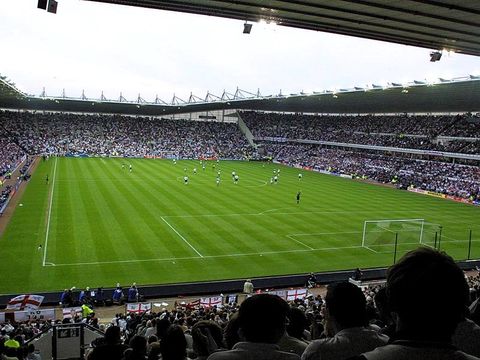
Oh, and I've not done anything like enough football over the past few months to keep me spiritually right. So tomorrow evening, I'll be at Pride Park, Derby, for the visit of Newcastle United.
And just in case you're wondering, I haven't gone all dip trip fantasia - 'spiritually right?'. I mean happy. It's simple stuff, that just happens to get waylaid sometimes.
The context for this is simple and clear. It has become the norm, for me to put others' interests ahead of my own. Or to imagine those others' interests to be my own - which, in part, they are. Fine lines. But I've known, for quite some time, that I have to re-take Shane (what foul foul wording), if I'm to content myself. And so, small steps though they are, I've let Emma know that I'll not be joining her and Alex at a festival in late August - a festival that I'm sure would be good, but one that would also become lost to me, as I'd end up being far more occupied with other peoples' children, rather than the much more interesting adults who'd be on hand. So I've said 'Thanks, but no thanks' to that. Alex' Dad will also be around, along with various other friends and relatives, so there'll be no shortage of bodies.
And I've booked in a trip to London, end of the month, when I'll be getting to the Riverside Studios (Fool for Love) and Soho Theatre (A Life in Three Acts).
Oh, and I've not done anything like enough football over the past few months to keep me spiritually right. So tomorrow evening, I'll be at Pride Park, Derby, for the visit of Newcastle United.
And just in case you're wondering, I haven't gone all dip trip fantasia - 'spiritually right?'. I mean happy. It's simple stuff, that just happens to get waylaid sometimes.
Friday, February 05, 2010
boobs
I am being befriended by a DadAtTheEdgeOfThePlayground - only occasionally AtTheEdgeOfThePlayground, truth be told - he works in sales, 'away a lot'. The man's son is Alex' best friend - both boys bright and quirky.
For practical reasons, it's been necessary for DadAtTheEdge' and self to have one another's phone numbers for quite a while. But today, I received a 'comedy text message'. It read:
BREAKING NEWS: John Terry Update - Fabio Capello has released a statement clearing the England captain, 'I don't know what all of the fuss is about... Everyone knows if a full back leaves a hole, it's the job of the centre back to fill it!'
That was it. The comedy text message.
I'm feeling a bit intimidated. Might have to make up some joke about boobs or something, next time I see him. You know, all laddish and that.
For practical reasons, it's been necessary for DadAtTheEdge' and self to have one another's phone numbers for quite a while. But today, I received a 'comedy text message'. It read:
BREAKING NEWS: John Terry Update - Fabio Capello has released a statement clearing the England captain, 'I don't know what all of the fuss is about... Everyone knows if a full back leaves a hole, it's the job of the centre back to fill it!'
That was it. The comedy text message.
I'm feeling a bit intimidated. Might have to make up some joke about boobs or something, next time I see him. You know, all laddish and that.
Monday, December 28, 2009
Weltanschauung
It was Christmas Eve, babe:
Manc.: (bright-eyed, amused) So? Which Premiership manager d' y' reckon it is, then?
Shane: Is what?
Manc.: Y' haven't heard?
Shane: No.
Manc.: Some Premier League manager has been caught leaving a brothel - hasn't been named, though. When I heard, my heart sank. I just thought 'Pulis'.
A conversation ensues, in which I explain that I can't believe that it would have been the Manc's beloved Pulis, manager of Stoke City.
Manc's Wife: The article said he was wearing branded sportswear as he left the building - which was on an industrial estate.
Shane: Sounds a bit Midlands, could be anywhere, though.
An alternative festive game develops, in which we compare guesswork and thinking. Our collective intellectual might forms a pointless Poirot.
Shane: So from what you tell me, we can identify three characteristics of the punter... he's high profile, with a lot to lose - so he's a risk-taker. We can assume that he's able to be fairly amoral about paying for sex, or the sex economy. And we know that he's the sort of man who's willing to be out in public in branded sportswear.
We narrow the field to six or seven.
Manc.: So if you were a Premiership manager, would you have been ruled out yet?
Shane: Great question. Risk-taker - I can be. Amoral as regards the sex economy - tricky, but yes, I can be that. Out in public in branded sportwear?
Manc's Wife: That's the one, isn't it?
Shane: I wouldn't be out in branded sportswear - no way.
Manc.: That's the measure of a man, isn't it. Who'd be willing to be seen out in branded sportswear.
Shane: It's one measure, that's for sure.
I spend moments through the rest of the day wondering about how the story - such that it is one - will be played out elsewhere. In various football managers' households, in pubs and clubs, and in the 'wider press and public', I imagine many shrugging shoulders. Later, I notice in the Daily Mail coverage, a reference to the brothel as a 'Scene of Disgrace'. 'Disgrace' in what sense, I wonder.
Manc.: (bright-eyed, amused) So? Which Premiership manager d' y' reckon it is, then?
Shane: Is what?
Manc.: Y' haven't heard?
Shane: No.
Manc.: Some Premier League manager has been caught leaving a brothel - hasn't been named, though. When I heard, my heart sank. I just thought 'Pulis'.
A conversation ensues, in which I explain that I can't believe that it would have been the Manc's beloved Pulis, manager of Stoke City.
Manc's Wife: The article said he was wearing branded sportswear as he left the building - which was on an industrial estate.
Shane: Sounds a bit Midlands, could be anywhere, though.
An alternative festive game develops, in which we compare guesswork and thinking. Our collective intellectual might forms a pointless Poirot.
Shane: So from what you tell me, we can identify three characteristics of the punter... he's high profile, with a lot to lose - so he's a risk-taker. We can assume that he's able to be fairly amoral about paying for sex, or the sex economy. And we know that he's the sort of man who's willing to be out in public in branded sportswear.
We narrow the field to six or seven.
Manc.: So if you were a Premiership manager, would you have been ruled out yet?
Shane: Great question. Risk-taker - I can be. Amoral as regards the sex economy - tricky, but yes, I can be that. Out in public in branded sportwear?
Manc's Wife: That's the one, isn't it?
Shane: I wouldn't be out in branded sportswear - no way.
Manc.: That's the measure of a man, isn't it. Who'd be willing to be seen out in branded sportswear.
Shane: It's one measure, that's for sure.
I spend moments through the rest of the day wondering about how the story - such that it is one - will be played out elsewhere. In various football managers' households, in pubs and clubs, and in the 'wider press and public', I imagine many shrugging shoulders. Later, I notice in the Daily Mail coverage, a reference to the brothel as a 'Scene of Disgrace'. 'Disgrace' in what sense, I wonder.
Saturday, May 09, 2009
Litigate
I've changed my mind.
That series of reflections that I was going to post (about reacquainting with The Artist), well they'll have to be sidelined - perhaps to be revived and immersed, veiled or otherwise fronted, in future blog posting, or some such. Now is not the time to write of those reflections. Ongoing dialogue is shifting what and how I understand of my meeting with The Artist, of what we did and what we didn't talk about. Trying to write about this would be hard, and trying to read that would be really frustrating.
And so, more learnings.
Apologies for the obliqueness - episodic and thematic. Maybe one day I'll start writing really crisp, no-holds-barred, let it all hang out type stuff. One day, maybe.
In the mean-time, just be glad that I'm not clubbing you with poetry.
That series of reflections that I was going to post (about reacquainting with The Artist), well they'll have to be sidelined - perhaps to be revived and immersed, veiled or otherwise fronted, in future blog posting, or some such. Now is not the time to write of those reflections. Ongoing dialogue is shifting what and how I understand of my meeting with The Artist, of what we did and what we didn't talk about. Trying to write about this would be hard, and trying to read that would be really frustrating.
And so, more learnings.
Apologies for the obliqueness - episodic and thematic. Maybe one day I'll start writing really crisp, no-holds-barred, let it all hang out type stuff. One day, maybe.
In the mean-time, just be glad that I'm not clubbing you with poetry.
Thursday, May 07, 2009
Love
Oh, forgive me. It's just that, well, I've had a week or so of being all in touch with my feelings. I think this comes from peak, or rich, emotional experiences.
I've embraced the past, I've stroked the head of a dying old bird, and I've come to understand things that I hadn't realised that I'd misunderstood. And so it goes.
Where am I going with this? Where indeed. Ah yes... For this month's posts, I'm going to pepper you with tiny extracts - dialogue, oddments of reflection, insights, and the stuff of general gaping, that came from my meeting with my old pal - The Artist, as mentioned previously.
As a starter, I'll say that we met up in Manchester - last Saturday - a warm, sunny day. We met at eleven on the dot, in the top floor cafe of Afflecks Palace, where we drank earl grey and ate toast, before moving on to the first of a few pubs. Approaching from the right (I hadn't spotted the second entrance to the cafe), The Artist called out my name and offered an open hand. I smiled, chorused back his name, and opened up for a hug. Already, 15 years on, things had changed.
I've embraced the past, I've stroked the head of a dying old bird, and I've come to understand things that I hadn't realised that I'd misunderstood. And so it goes.
Where am I going with this? Where indeed. Ah yes... For this month's posts, I'm going to pepper you with tiny extracts - dialogue, oddments of reflection, insights, and the stuff of general gaping, that came from my meeting with my old pal - The Artist, as mentioned previously.
As a starter, I'll say that we met up in Manchester - last Saturday - a warm, sunny day. We met at eleven on the dot, in the top floor cafe of Afflecks Palace, where we drank earl grey and ate toast, before moving on to the first of a few pubs. Approaching from the right (I hadn't spotted the second entrance to the cafe), The Artist called out my name and offered an open hand. I smiled, chorused back his name, and opened up for a hug. Already, 15 years on, things had changed.
Tuesday, April 28, 2009
Kith
I'm becoming reacquainted with a friend from the past - one of those ones that you should never lose touch with, and that you did kind of seems bizarre. To me - not on Facebook, blogging under a pseud' - this is a big deal.
Related, there has been emailing. I've received the gift offer of a pastel drawing of my sister that was done in 1993, when she was a small 8 year old - it's her 24th birthday today (the gift offer came from the old friend, An Artist).
It seems that a meeting - in Manchester - will follow. Men will hug.
Related, there has been emailing. I've received the gift offer of a pastel drawing of my sister that was done in 1993, when she was a small 8 year old - it's her 24th birthday today (the gift offer came from the old friend, An Artist).
It seems that a meeting - in Manchester - will follow. Men will hug.
Thursday, March 12, 2009
Crikey!
Yes, alarm.
Shane: Blah blah blah workish blah blah blah.
Emma: Mm. Or maybe, something a bit more Web 2.0?
Shane: 'Web two point oh'?
Emma: Mm. (pause) What?
Shane: Where did you learn to speak like that?
Emma: Like what?
Shane: 'Like Web 2.0'.
Emma: I read things.
Shane: Well, what are you on about?
Emma: Y' know, new technologies, new media, new ways of communicating - Facebook, Twitter, 3G technologies -
Shane: Whoaaaaaaa! Just calm down for a minute, there!
Emma: - You know you're going to have to.
Shane: Och och och and och!
Emma: Am I right?
Shane: Maybe.
Especially spurred on, I think, by Stephen Fry's everywhereness and his prosthletising about the many merits of Twitter, people who I would not have imagined playing along with such sports, have been. (*whispers* And yes alright so maybe it does look a bit fun). But do I really want to start something that I really don't think that I'd sustain? And isn't it all just going to turn out a bit Facebook. And - most pertinently - what is it that people are getting out of all of this? I mean, really getting out of it. Apart from the warm glow of feeling connected - in an acceptably mundane sort of way. I mean, apart from that, what is it?
I'm feeling archaic, like a bit of a dinosaur, like the sort of person to whom the idea of public lists of his friends or 'followers' would feel odd. What about the uncouth and the deranged - the ones not on the list? Now, if Jesus were alive today... well, 'whale of a time', he'd lap it up - fish to water, duck to pond, Hart to Hart. But I'm not Jesus.
(blog posting interruptus)
I've just watched a short film, 'Twitter in plain English', on the Twitter site. It was... it was... it was really nice - when Carla discovered that Steve had a passion for baseball, and when she discovered that Julia was reading a new investment book, and when everyone - yes, everyone - discovered that Carla - herself - had a new passion for Van Halen!
Too good, just too good. I felt all warm inside. I want that feeling. I want that feeling that Carla had.
Perhaps when I've got a moment one weekend.
Shane: Blah blah blah workish blah blah blah.
Emma: Mm. Or maybe, something a bit more Web 2.0?
Shane: 'Web two point oh'?
Emma: Mm. (pause) What?
Shane: Where did you learn to speak like that?
Emma: Like what?
Shane: 'Like Web 2.0'.
Emma: I read things.
Shane: Well, what are you on about?
Emma: Y' know, new technologies, new media, new ways of communicating - Facebook, Twitter, 3G technologies -
Shane: Whoaaaaaaa! Just calm down for a minute, there!
Emma: - You know you're going to have to.
Shane: Och och och and och!
Emma: Am I right?
Shane: Maybe.
Especially spurred on, I think, by Stephen Fry's everywhereness and his prosthletising about the many merits of Twitter, people who I would not have imagined playing along with such sports, have been. (*whispers* And yes alright so maybe it does look a bit fun). But do I really want to start something that I really don't think that I'd sustain? And isn't it all just going to turn out a bit Facebook. And - most pertinently - what is it that people are getting out of all of this? I mean, really getting out of it. Apart from the warm glow of feeling connected - in an acceptably mundane sort of way. I mean, apart from that, what is it?
I'm feeling archaic, like a bit of a dinosaur, like the sort of person to whom the idea of public lists of his friends or 'followers' would feel odd. What about the uncouth and the deranged - the ones not on the list? Now, if Jesus were alive today... well, 'whale of a time', he'd lap it up - fish to water, duck to pond, Hart to Hart. But I'm not Jesus.
(blog posting interruptus)
I've just watched a short film, 'Twitter in plain English', on the Twitter site. It was... it was... it was really nice - when Carla discovered that Steve had a passion for baseball, and when she discovered that Julia was reading a new investment book, and when everyone - yes, everyone - discovered that Carla - herself - had a new passion for Van Halen!
Too good, just too good. I felt all warm inside. I want that feeling. I want that feeling that Carla had.
Perhaps when I've got a moment one weekend.
Subscribe to:
Posts (Atom)